Sunday Musings – 19th July 2021

Skill Vs. Attitude

The most famous image of recent times is reproduced below…..

A mighty alpha human, bending down and eating grass after scaling an imposing height, perhaps one of the greatest in the sporting history of Humankind…..

The image can be interpreted as a superhuman exhibiting humility after achieving the almost impossible…..

But as Novak chose to put it…..

“As a kid I was dreaming of winning Wimbledon, so, like every child, you dream of doing something crazy when you actually achieve it — if you achieve it — and that was one of the things.”

In saying so, Novak demonstrated the most amazing trait of all living beings…….

….. A T T I T U D E …..

No I am not here to discuss that Attittude = 100% according to alphabets bullshit…..

We the humans are programmed to believe that the pre-requisite to success in life is skill…..

Sadly, in most of the cases, it is not seen as a pre-requisite but as the ultimate key and trait to achieve success…..

Cambridge dictionery defines Skill as “Ability to do things well, especially because you have practised it.”

And trust me that’s all we can say about Skill…..

Skill brings you dexterity, proficiency, knowledge, technical expertise etc…..

But that’s all about it…..

The above can guarantee you ease whilst your execute, but can it guarantee success?????

Well that’s a million dollar question…..

Attitude is defined as a “Position (?) assummed for a specifice purpose”.

The synonyms for Atttiude are – Approach, Belief, Point of View, Stance…..

So what is more romantic? Well in my opinion it is certainly attitude…..

Whilst skill leads to curiosity and anxiety, attitude leads to amusement and joy…..

How many inventions in the world we can attribute to skill?????

Probably nothing…..

Inventions do not stem out of craftsmanship that skill imparts but are largely result of the cunninness which attitude brings to you…..

So what do you need in life to be successful, Skill or attitude?????

Well in my opinion, the right balance of both…..

Mere skill will make you part of crowd, mere attitude will make you an overbearing, imposing, good for nothing brat…..

A right mix and a right team of both the traits is needed to succeed…..

Who what should be the percentage? 50-50?????

Or something else…..

Well to explain that i will use the anlogy of Left and Right hand…..

Both hands are needed for perfect execution…..

Some use right hand more and some use left hand more and a few rare ones are ambidextorous…..

Of course there are very few sepcially abled souls who make it good for their life on one or no limb also but those are very rare and can be taken only as an exception and not as an expample…..

I hope I am able to explain it clearly…..

Coming back to where we started, in 2021 Wimbledon final, Berrettini had better skills than Djokovic, he certainly had…..

But at the end, it was Djokovic’s attitude which made him the invincible champion he is…..

But Djokovic could not have done it with no skill and only attitude…..

He could have never…..

Posted in Business, India, Intrepreneurship, Management, Performance, Uncategorized | Tagged , , , , , , , , , , , , , | Leave a comment

Sunday Musings – 11th July 2021

How Trains Inspire me…..

The image shared is taken by me during a lazy Sunday walk…..

We have shifted into our new beautiful home, our dream home about a year back…..

There is a railway track which runs about 3 kms away from our house…..

A rumbling sound of train passing can be heard in our house at regular intervals. The sound is not disturbing at all. Instead it seems like music to ears and I feel refreshed whenever I hear those sounds…..

Trains have always fascinated me…..

My favorite pastime is to walk down those rails, with my buddy, Bentley, our adorable Labrador walking besides me…..

I enjoy the walk like nothing else. Bentley although gets disturbed when a train passes by…..

My Kids find this obsession of trains quite bewildering and at times quite childish as well…..

I sometimes gets admonished by my kids on this obsession also. My proposals to travel by train rather than by flights gets shot down instantaneously…..

I always, however, tell them that before I meet my parents in heavens, I will surely cover the entire length and breadth of country in a train journey…..

My obsession with trains is not childish…..

As a matter of fact, everytime I see a train passing by, I derive few important management lessons out of it. I will share few of those below…..

Discipline: Trains follow immaculate discipline. The routine, the process and the procedure followed by train, as a train, is mind blowing. The almost 2.5 kilometers of thing follow a straight line approach to make the thing happen as it is supposed to happen…..

Rhythm: A subset of discipline, just watch a train passing by and observe the rhythm it follows. Tell me if it does not fascinates you…..

Respect: Think about waiting at a signal for a train to pass by. Whilst you look at your watch, waiting for that stupid rod of steel to get lifted, it breezes past you, like a king in its full glory…..

Try practicing the same discipline and same rhythm in your life and your profession and tell me will you not be commanding that respect…..

Posted in Uncategorized | Tagged , , , , , , , , , | Leave a comment

Empathy

The biggest challenge I face managing a business which is labor intensive is to understand the circumstances under which or the which have forced a person to react the way he/she is reacting. And one thing is sure that at that level, business can be managed by managing people who in turn manage processes. Hence managing people is the only thing a CEO or a person heading business is supposed to do.

Most of us reach this stage of our career due to abundance of Technical skills. But having reached this stage, many (might) find difficult to hold on due to immature people skills.

I do not consider myself as a Guru but still take liberty of offering basic advise. This will in some way help them in managing people better and accomplish better things.

  1. Be sensitive about the way you ask for work
  2. Be ready to manage conflicts
  3. Set easy goals for them. Congratulate them and make them feel great when they achieve those goals, howsoever trivial they might be
  4. The golden rule, before you judge me, walk a mile in my shoes. Practice this
  5. Know and understand your team. Develop them as a team and not as individuals
  6. Meet as often as possible with them. Give feedback, Ask for ideas, Motivate, Make them feel great
  7. Be visible and accessible. Practice and open door policy
  8. Reward them
  9. Coach them. Be a Mentor
  10. Soft skills are tough or almost impossible to develop. Hence rather than pushing people to pick up new things, ask them to better what they already have. If they had the knack of developing soft skill at that age, they would most certainly be in your positionMentoring-Pic-1

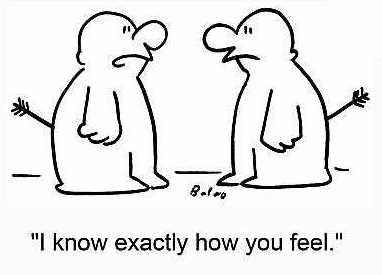
Point no. 10 throws up an interesting irony. It is true that soft skills cannot be developed. But they can be improved to such an extent that it almost looks like an innovation if not development. the greatest of tool to achieve that is to exercise empathy.

Empathy seems to be a simple world. Prophetically, everybody feels he/she is exercises empathy but it is a difficult and if you are a person who exercise selfdom, it is almost an impossible trait to exhibit.

To exercise empathy, one has to think beyond oneself and his concerns.

empathy

Ask yourself, can you or are you doing following. If yes, you are exercising empathy. If no, you may be extremely successful but when you retire, you may not have friends you can count upon.

  1. Looking beyond your own viewpoint
  2. Validating others perspectives
  3. Listening and giving importance to what others say

849afdc275e50235254bb361a5989683

The greatest service you can do to yourself is to develop an emphatic attitude. It is like Newton’s law. The more you want to understand people, the more they would want to understand you ans in the process you will build a progressive, co-operative and collaborative environment which is driven by teamwork.

Posted in Business, Country, Economy, Finance, Governance, Independence, India, Intrepreneurship, Management, Performance, Uncategorized | Tagged , , , , , , , , , , , , , | 2 Comments

Jai Hind….. Jai Ho

It is a wonderful Sunday today. Personally it becomes more blissful for me as I am enjoying an exquisite family holiday in Coorg. It is in the midst of a coffee plantation and I am totally secluded from the mechanized world we live in.

Why I am bothering to tell this. There are many reasons for that. First and foremost reason is to remind myself that what a wonderful country we Indians possess. The second reason is that our dynamic prime minister yesterday addressed the nation with a zest and fervour which was missing from Indian polity for such a long period. Third and not the least important of these is that I was reminded yesterday of a press comment made by one of a visionary Industrialist Mr.Narayanmurthy. Very Very surprisingly, Mr. Narayanmurthy slammed Indians and especially the youth of India for not having an earth shaking idea for last 60 years. Following is the link.

http://economictimes.indiatimes.com/news/science/no-invention-earth-shaking-idea-from-india-in-60-years-nr-narayana-murthy/articleshow/48085732.cms

I have huge respect for Narayanmurthy. Every Indian should have. He is an icon. But with all due respects to him, I think he has gone berserk here. We as Indians do not have many Narayanmurthys to look upon and the youth of India need many of them to look upon. And for one of them to make such a statement is tremendously unfortunate.

Let us critically examine. Mr. Murthy talks about Invention and it is true we Indians may not have inventions in last 60 years to boast about but my question is what constitutes an invention. Does materializing the concept of steam engine only constitute an invention. Does only giving materialistic useables and wearables only constitute invention. Does a great Idea and a great practice does not constitute an invention. I am nobody as compared to Mr.Murthy but I would vehemently challenge him on this account.

Let us see what as a country we have achieved in last 68 years. I am more than 100% convinced that with the legacy we carried for ourselves, no other country in the world would have achieved so much as we Indians have. The listing is strictly not in chronological order as it hardly matters.

  1. At the dawn of independence our forefathers executed world’s largest merger and acquisition activity. 560 princely states of India were merged into a common dominion in almost bloodless operation.
  2. Few months into birth and we saved a disloyal and backstabbing neighbouring nation from going into bankruptcy. A deed we should never have done and should have allowed our neighbour to go into tatters. We still are paying a heavy price for that act of humanity.
  3. 18 bloodless change of power at centre. In a country which is plagued by illiteracy and caste divide, this is no mean achievement. We are probably the world’s most mature democracy.
  4. India was net importer of food grains and depended upon international food aid upto mid-1960s. We faced severe drought in 1965 and 1966 and were recipient of food aid under PL 480 act of U.S. government. However since than lot of scenario has changed thanks to significant policy reforms and green revolution in India. Today India has self-sufficiency in food production and exports various food grains. We are largest producers of fresh fruits, milk, pulses and oil seeds, sunflower seeds and second largest producers of wheat, rice sugarcane, potato, tea, cotton etc in the world. In addition to growth in total output, agriculture in India has shown an increase in average output per acre since independence. While our total population tripled since independence our food grain production more than quadrupled and there has been substantial increase in available food grain per capita.
  5. Indians have been able to develop one of the most envious space programmes in the world started in the year 1969 after their independence .Today we are launching various space programmes including Lunar and Mars mission,and commercial launching of satellites of developed nations at very low cost. We have benefited humanity by way of forecasting of cyclones in Indian peninsula thereby substantially reducing loss of life thanks to our space programmes.
  6. Indians have been able to pursue an independent foreign policy after independence and interference by outside powers have been zero, thanks to strides made by India in various fields like agriculture production, economic progress, space programmes, nuclear energy and defence.
  7. Only country in the world to give birth to another independent nation within 25 years of its independence. Indians waged the swiftest war in modern times with a technology which was dilapidated as compared to our aggressive neighbour. Mighty sabres were blown into pieces by tiny Gnats and the world watched in awe. It incidentally was a major diplomatic win also as the American fleet was waiting in Indian Ocean to launch missiles on us. Had we held the aggression for another 48 hours, there would have been a different map on google today.
  8. One of the five nations to develop nuclear submarines
  9. Lowest cost producer of Steel, Almunium, Cement, fertilizer. Lowest cost delivery of wireless telephony. Developed world’s lowest cost supercomputer.
  10. We are now the third largest economy in world in terms of size and is tipped to take over Japan and China in next 15-20 years.
  11. India gave birth to micro finance which now rules the development schemes in all underdeveloped nations.
  12. Fiscal policy given by Mr.V P Singh, the then finance minister in 1987 still is the backbone of all financial reforms in all underdeveloped economies of the world.
  13. Four major wars inflicted on a young nation. Comprehensively won three of them. Fourth one (China) was lost only due to a tactical blunder by the then polity which chose to still believe in the goodwill generated pre-war due to Panchsheel Principals. Else our country was on top of the situation in that war too.
  14. The only country to have a strong and mature political system in place. Look around us, every country around us has faced and is continuously facing military coup. Why we have never faced the same. If we believe in good luck, we all the sadly mistaken. Our forefathers painstakingly built up a system which political system thrived. If you do not believe it, please read this…. http://scroll.in/article/731426/why-there-has-never-been-a-military-dictatorship-in-india
  15. India is now the only developing nation sending satellites into geo sync orbit. And the cost at which it send is mouth watering. All the so called developed nations now line up at India’s doorstep to make that happen for them at that cost.
  16. India is the second country to send satellite to Mars. And the cost at which it has done it…. Well we all know what it means

I can go on and on. I have not yet even touched Yoga, Culture, IIT, Bollywood, Medical Sciences, Swami Vivekananda, Guru Gobind Singh. Most of you might be amazed at finding Guru Gobind Singh here. But Lord McCaulfey has written about Guru Gobind Singh that “If the english militia had even one general with the prowess, might, wisdom, courage, foresightedness and leadership qualities of Guru Gobind Singh, English empire would have survived for another 500 years.”

Sorry Mr. Murthy, your notions are misplaced. On one side we have you and on another side we have Mr. Modi who brings faith and hope upon all of us.

Today Salman Khan inspires me more than Mr. Murthy. In his not so noteworthy and dismissive movie “Jai Ho” he says just do three good deeds for every good deed which comes your way. We just are in need of that kind of motivation. Nothing else. What if every able bodied individual Indian follows the principal propagated by Salman Khan, where will we reach. Even sky is not the limit then.

Well I am exercising it in my life. So are wonderful people around me. In next 8-10 years, we are confidant to develop a mesmerizing aura around us and then we will create a snowball effect out of it.

What we need from you Mr. Murthy is a mentorship and a confidant atmosphere that all our endeavours will be recognized and if found palatable, will be nurtured. Only an approach like that will help us creating a strong India. The youth is energetic, hopeful, restless, and positive but at the same time is intolerant also. Cynicism is not going to work at all.

Posted in Business, Country, Economy, Finance, Governance, Independence, India, Infosys, Intrepreneurship, Management, Modi, Performance, PM, Politics, Prime Minister | Leave a comment

Improving Cash flows – Inventory is the Key

I am currently following a very interesting discussion in one of Linked in groups. The moderator has raised a question “If you could do only one thing to improve cash flow, what would you do?”. There are variety of answers by some very top-notch and learned professionals. Statistically if I put it across, 80% of the answers are about managing Cash to Cash Cycle. 60% of these 80% suggest decreasing the AR (Accounts Receivable) cycle and increasing the AP (Accounts Payable) cycle. I must say, I was somewhat disappointed after reading these responses.

Decreasing AR and Increasing AP are sort of Quick fix solutions and are aimed at a very very short term gain/relief. None of these methods are sustainable in long run. The reason in simple. First of all, there is a paradox in the approach. On the one hand we are trying to decrease AR and are talking about increasing the AP without realizing that our AR are somebody else AP. Give me one simple reason as to why that somebody else is also not working on improving his own cash flow applying same philosophy.

Improving cash flow is a tedious exercise and there cannot be any short cut approach towards same. Both decreasing AR and increasing AP entail hidden costs which at the end of the day hit bottom-line very severely.

Every since I embarked upon lean journey in one of my assignments, one think came out very clear to me, “Inventory holds the solution to almost all the issues management faces”. Here we are talking about inventory in broader perspective. Not just like Stock or work in progress. Here we are talking about inventory in the value stream. This may of may not be in shape of merchandise.

Any current state value stream map will highlight, besides other following four important components  a.) Motion, b.) Waiting, c.) Transportation and d.) Inventory. Each of these components will be present with or without value addition. To move from current state to future state in value stream, we need to eliminate all non value adding components.

Inventory however remains a component where it is almost impossible to imagine any value addition stream. This inventory will be within or between the processes and will consume critical resources resulting in blockage of working capital.

On a financial report, inventory sits in form of Merchandise in process. A more drill view of inventory is Inventory + AR. In value stream map, however, inventory refers to queues of information, paperwork, electronic files, or project work in-development. More often than not, cost of inventory in VSM will be much higher than cost of inventory held in form of merchandise/AR.

The way to have a sustainable improved cash flow is to work on these inventories. This is time-consuming and intellectually taxing but definitely more rewarding and the icing on the cake is sustainability. Reducing this inventory will mean improved throughput, better yield, faster delivery and greater amount of customer satisfaction.

Posted in Business, Finance, Governance, Management, Performance | Tagged , , , , , , , , , , , | 2 Comments

The Emerging Role of CFO

The best place for assessing the role metrics for particular function is to skim through Job portals and look what potential employers are putting up as requirement for a particular function. This is an activity I undertake with lot of interest as it helps me to understand the moving trends in current scenario.

The most dynamic of current functions is turning out to be that of CFO. This function has come out of age and has moved from a mere custodian of finance and transaction, strictly speaking a technical profile to even beyond a techno-commercial profile. So much so that there is a need to coin a new term for this profile which should encompass Technical, Commercial and Operations. Maybe Techcomop is a better word. I invite suggestions for same.

The landmark event which triggered this transformation was the crisis of 2008. Post 2008, in order to survive, mature businesses streamlined their assets by divesting non-core assets, worked upon improving cash flows through better Cash to Cash cycle management. But these measures were not enough. The most important of all was to improve efficiencies in operations (core and non-core) in order to yield a better bottomline. 6 years down the line, we can witness that businesses which have treaded this path are fit than ever before, efficient and have beaten the economic growth rate. Time has come that businesses are looking beyond endurance to prosper more.

Another way 2008 influenced the way businesses operate was emergence of a complex control environment. Regulations were tightened and more transparency was brought in reporting and disclosure environment.

Owing to above CFOs started to have more personal stake in and accountability for their function. On behalf of the business they are accountable for, they have to put in place business processes and protocols which ensure that the objectives stemming out of changed business environments are being met and the finance function has the necessary expertise to handle the same.

In particular when I speak of personal experience, I was working for an Apparel business when the crash of 2008 happened. Prior to that industry had to absorb shock of withdrawal of quota system whereby preferential treatment to business according to geographical location was withdrawn. Suddenly the business which was truly local, became global. Pressures came on costs and operations. In order to be competitive, entire strategy of business was to be reworked overnight. Focus, which earlier on quantities was turning the business into more like a commodity business was shifted to efficiency. In order to sustain, the business had to be efficient in all terms – operational, costs and processes. CFO played a greater role in bring about fiscal and operational discipline. Primary responsibility of function changed from custodian of finance and data to guarantor of success of business objectives.

A collective influence of regulation and globalized environment ensured that traditional MIS setup no longer worked for any organization. The business truly had to be restructured and changed and to monitor the efficacy of this restructuring, more analytics came in the threshold of finance function. The data multiplied as the businesses grew in all direction and existence to large and complex data provides challenge and opportunities for more analytical and predictive insights. Today it can be safely said for any mature business that at any given point of time, data systems and hierarchy do not reflect business needs. This is so because the environment is ever evolving. Plays in dataset catches up and the team of CFO spends significant time in reworking the data to meet the business needs. Thus one of the most important challenge for today’s CFO is the emergence of Business Intelligence. CFOs are supposed to be natural analysts and modern day Business Intelligence falls under the realms of CFO.

Today’s finance function needs to have sufficient understanding of the business and its full operational complexity to report on non-financial KPIs – the publishing of which is a growing trend. These non-financial KPIs often don’t come through traditional accounting system. There is a growing appetite for non-financial KPIs another expectation from modern day finance team.

With changed scenario, business risk is now at a higher level than ever. Avoiding risks is no longer an option. CFOs are facing extreme circumstances whereby they are being asked to cut corners by budgetary practices and also being pushed by business necessity. At the same time, they are expected to derisk the organization from emerging risk approaches. CFOs are expected to scrutinize the effectiveness of risk management processes. The CFO is expected to bridge the gap between risk and opportunity and be proactive and prepared to take risks. Owing to access to data set and analytical capabilities, the CFO is better placed than anyone else to mitigate the risk associated with any appropriate business action.

Another area where the CFO of toady is expected to contribute is transformation of business. When we talk about medium sized businesses, transformation primarily comes from three activities a.) Reducing (or rationalizing) costs, b.) Improving efficiency and c.) Integrating the different business functions. Today’s CFO is expected to re-engineer and transform the business on an axis which encompasses these three activities. The function of CFO is today a catalyst of change across the business, driving changes which effect long term business performance.

From a stakeholder perspective, Bankers are perhaps the most important customers of a CFO. I may not win many friends for making this statement but more often than not, particularly for a small business, lending renewals become a period of pain and distress. An effective CFO is at a helm of banking communication. Being proactive, serving the bankers beyond the absolute necessity of protocols goes long way towards building a strong relationship. The days have gone when the only point of communication with bankers was submission of QIS/Stock and CMA statements.

Modern day CFO has to act as a perfect partner to the CEO. A modern day CFO is a person who owing to his unique position in organization is able to comprehend connections between all functions and make them agree on holistic view of the business. So he acts as a conduit between all stakeholders of business. Through this position, the CFO inform and contribute to strategy of the organization. This has become such an important relationship (of CFO and CEO) that in today’s time we see a growing trend from the role of a CFO to that of a CEO.

It can be safe to say that traditional roles of finance function are now taken for granted. The rules of the game have changed for CFOs, reflecting a more uncertain, dynamic and global economic environment in which their businesses operate. This is made more complex by extraordinary rate of technological change. This future environment presents enormous challenges for CFOs, but it also provides a great opportunity for ambitious finance professionals seeking a rewarding and enriching career. Aspiring CFOs with commercial exposure, who have developed their non-financial expertise are the ones to watch.

Posted in Business, Finance, Management, Performance | Tagged , , , , , , , | 1 Comment

Cost Cutting Vs. Cost Optimization

The latest buzzword in any business is budgeting and forecasting. A little bit of introspection and we find that budgeting practices are often aimed at cost reduction. Nothing but business environment is to be blamed for this. Growth rate of economy is dismal meaning consumption is not really increasing. Thus businesses are finding it difficult to increase top lines. RBI has refused to cut interest rates and inflation is shooting through the roof. This means improving bottom line whilst sustained pressure on topline seems to be a pipe dream.

Thus businesses across the globe are trying to identify means to cut costs in order to sustain bottom line.

Cost cutting is often taken up very aggressively within an organization. The most impacted function is often Human Resources. This coupled with reduced services and bringing redundancies in operation often have drastic side effects. Cost cutting program are the most difficult form of organizational change to maintain. It disrupts daily work rhythms by dampening morale, particularly when head counts are cut.

So what should be done?

There is a different philosophy than cost cutting called cost optimization. In short cost optimization is the process of determining the most cost effective solution under the given constraints without effecting the performance of business.

Cost optimization is a micro tool. The idea behind cost optimization is to sieve each element of cost to understand its impact on operation of business. These sieved costs are then prioritized against the constraints like capacity, demand and productivity.

Cost optimization entails a systematic and sustainable method to manage priority costs to ensure that operational capabilities of functions are not affected. A company’s growth is reflected by its capability to efficiently manage costs while ensuring optimum productivity.

Typically cost reduction programs deliver short-term tactical gains and do not deliver long-term sustainable improvements.

Cost optimization should be a priority for all businesses. Any businesses competitiveness depends on how well it manages its value chain relative to competitors. What differentiates any two businesses in this respect are scale of activities, technology, and resource intensity. More controllable factors are inherent process of business like continuous improvement, quality set up, efficiency matrix, capacity utilization, effectiveness of business processes, vendor/customer relationships.

The most popular tool for cost optimization is ZERO BASED BUDGETING. Under this technique, all the historical patterns of costs are ignored and costs are defined afresh, reworking the priorities and necessity for same. Other tools are Value Stream mapping, Benchmarking, Break Even Analysis, Shut down cost analysis and fixed cost analysis.

In the recent past, the focus for optimizing costs has moved to a more intrinsic resolution. Organizations routinely expect all functions to contribute to annual strategic targets by improving operational efficiencies.

In nut shell cost optimization is a much broader agenda than cost cutting. The exercise has permanent and sustained impact on working of organization rather than cost cutting the impact of which is temporary and most often detrimental. Cost optimization in effect encompassed cost cutting and further effective demand management, better skill management and better product quality.


Posted in Business, Finance, Governance, Management, Performance | Tagged , , , , , , , | Leave a comment

It is time to be little optimistic

Indian economy witnessed its maximum growth in recent years in FY 2006-07 where the growth was reported at 9.4%. Post 2006-07 the economy slumbered at an agonizing and painful pace.

According to a recent survey, Factory output in India for the September touched a record low owing to fewer export orders. The output indice is weakest since December 2013 and has gone down for a consecutive second month.

It has been four and a half months since the new government has sworn in. For normal times, this is just about the period when the honeymoon starts to finish and harsh realities face the incumbents. For some less fortunate like Arvind Kejriwal, it takes still lesser time.

But these are hardly normal times, aren’t these.

With every single passing day, expectations from Modi government are soaring. It seems, we still are in pre-election days of promises and more promises.

The current low output numbers could be shrugged off riding on the optimistic sentiments owing to high expectation from the (new) government. A youtube video of a pakistani journalist praising Narendra Modi went viral. Please see the same below.

It is not that things are not happening. But is the pace justified? There are many welcome developments like initiatives taken to repeal anarchic laws. Prime Minister’s efforts to reach out to people at a personal level are also heart rendering.

But all these will be seen as mere propaganda if something concrete and lasting is not done. The sooner the better. Else there is a chance that our dynamic Prime Minister will find himself in a whirlpool where he will raise the expectation level on daily basis and will fail to deliver.

India is at a very precarious stage demographically. The most important strength currently India can boast of is presence of almost 60% of its population under the age of 35. Our Prime Minister does not leave a chance to harp upon this fact in any of his public interaction.

But this strength will become a burden if India fails to create jobs for such massive young population and that is no mean task. Industry estimates suggest that a growth rate in the region of 9.5% is required to meet that target. This means India will have to nearly double its Industrial Output.

This in turn mean a very tight leash on government expenditure and boosting exports to ease the pressure on current account deficit. Increasing industrial efficiency by leaps and bounds. Fueling consumption to sustain growth and reviving investment.

Things are not going to be easy. It is evident so as RBI refused to cut lending rate despite business clamoring for same.

Make in India is a great philosophy but it has to be implemented in spirit. More concrete steps to be taken on FDI. Merely proclamations of intent will not be of any use. Real changes and commitment is needed. The whole mindset has to change particularly with respect to FDI.

And also it is time to be little optimistic.

Posted in Governance, Performance | Tagged , , | Leave a comment

Sustainable Business – Need of the Hour

From the traditional goal and objective of business of  maximizing  profits, Managers are now talking about creating values. It can be safely said that the neo age managers look upon maximizing prosperity rather than maximizing profits. Prosperity is a greater  challenge  than profit as former is more wholesome than latter. The former is long term whist the latter is short lived. In today scenario, a responsible society will always attach higher value to long term well being of its population than to short term spurt in GDP. It may sound weird but perhaps this may the reason for slowed growth rate of Indian Economy over last few fiscal year. I may not gain many friends for commenting this.

2008 financial crises of US was an eye opener. If anything we learned from that period, It was that the boom of an unregulated economy might benefit consumers in the short run, it is a luxury often short lived. In the long run, profits that come from a unregulated market boom are ultimately condensed into pockets of few corporates but when those markets bust, common consumers are forced to pay the price.

Above was a clear cut indicative of keeping profits above prosperity. However if we have to create prosperity, many other issues needs to be tackled apart from profits. At times the other issues might have to be preferred over profits, but in the long run, there will be a definite payback.

Sustainability of business is the key. This  sustainability  comes from many factors. But for the sake of brevity, we will touch upon only a few in this write up. My favorites are a.) Processes, b.) Business Models and c.) Environment

a.) Processes: Time and again it has been proved beyond doubt that Incremental process and product innovations have brought us cleaner, more efficient, more socially conscious products and services. There are a huge number of ways that businesses can change, for example adopting cleaner production techniques, developing resource and energy efficient processes and examining the transportation of goods. As well as creating a lean operation and generating cost savings, these refined ways of working can enhance your reputation, building a positive image both with customers and staff alike.

People are critical to business success. Integrating good employment practices into business, such as family-friendly policies, flexible working and access to training, will help to create an environment where people feel valued and content. In today’s tight labour scenario, this could well prove crucial for ability to attract and retain the right people.

b.) Business Models: Having said what I have to say, it is also true that many novel or even radical new process or product innovations have fallen short of their potential because they were unable to compete within the constraints of an existing or traditional business model. This at times happen because more often than not vast majority of consumers and companies remain unwilling to pay a premium for such advances.

The biggest reason for companies to embrace business-model innovation is the threat that current models will ultimately slip or even fail. Examples of business models that have quickly transformed – or even become obsolete – abound across sectors: media (the decline of print), retail (the rise of online shopping and the sharing economy), education (the growth of online degree programs), music (the boom in digital music services), telecommunications (the proliferation of smart devices and associated services) and even finance (the creation of peer-to-peer lending). Many traditional business models that still remain viable today may rely on mispriced resources (from customer perspective) and other market distortions that make them more competitive than they would otherwise be.

To innovate within systems, companies need to be able to see and adapt to shifting market conditions and other changes by identifying trends and engaging stakeholders. Leaders must respond to, but also create, systemic change to build new markets while protecting themselves from any dramatic systems shifts that could present a risk. To do all this, companies must be willing to see beyond the obvious, short-term business case.

Rewards await those who can do it right. In health care, Narayan Hrudayala Hospitals, winner of a Financial Times’ Boldness in Business award in 2013, provides a good example. The hospital uses innovative process efficiency, revenue generation, cost structure and financing to make a profit while providing both rich and poor access to vital health care services. The company, along with others such as Arvind Eye Care, is changing the way medical providers in India think about the cost, quality and reach of their services. At Narayana Hrudayalaya, the average open-heart surgery costs less than $2,000, compared to well over $100,000 in the US.

c.) Environment: The greatest risk to the business sustainability is the struggle struggle and failure to articulate a vision of a future that is both prosperous while remaining within planetary boundaries. Until a business is able to showcase a paradigm shift, then no-one is going to feel safe letting go of the current system that is driving us towards the edge of an environmental and social disaster.

Given rising natural-resource scarcity and frail ecological balance, companies can no longer afford to ignore impact of their activities on environment. Forward-thinking business leaders already recognize that, in the twenty-first century, competitiveness will hinge largely on using natural resources more efficiently and cutting carbon emissions.

In addition to the obvious benefits, this approach will bring reputational advantages, as consumers – whether through education or first-hand experience – become increasingly aware of the environmental and social impact of the goods and services that they purchase. Companies that adhere to unsustainable, damaging practices and continue to pass on the associated costs to consumers may find that their customers start shopping elsewhere.

Many large companies have established sustainability goals and targets, and it is becoming increasingly common for these goals to address significant environmental challenges like climate change. More efficient use of natural resources, like energy, reduces operating costs and therefore makes business sense. In response to consumer preferences, some companies are also taking steps to reduce the environmental impact of their products and services as well as their supply chains.

Managers today are looking at long term sustainable values. It is a concept now deep rooted in the wellbeing of present and future generations. Businesses today are trying not to encroach upon the rights of future generations to meet the present needs.

People say about Bhutan’s focus on wellbeing as irrelevant as they’re just a little kingdom out there in the foothills of the Himalayas. There are questions as to whether the effort can be scaled up to deal with overdeveloped and highly  industrialized  nations? Of course, Bhutan’s  endeavor is on a different scale but what it does is it simply opens up the imagination that this kind of thinking is possible and the tiny country is taking small steps in the right direction.


Posted in Business, Governance, Management | Tagged , , , , , , , , | Leave a comment

Performance Vs. Conformance

January 1948. Mohammad Ali Jinnah had decided to be adventurous and had pushed mujaheedeens in Kashmir Valley. India had just gained independence and was under charm of Lord Mountbatten and Mahatma Gandhi. Though it is ironical in many ways but Indians were under impression that only Mahatma Gandhi’s ahimsa has proven instrumental in gaining independence. Indians had drifted away from Krishna’s discourse to Arjuna on the battlefield and battle cries of Shivaji, Maharana Pratap and Guru Gobind Singh to defend motherland and pride associated with it.

Indians deliberated for two full days for action to be taken next. Indians had smoothly played into Mohammed Ali Jinnah’s hands who has decided to push mujaheedeens on the battle and had kept Pakistan’s militia away from the battlefield. Indians looked upon it as an internal problem rather than an external aggression. In those two important days, mujaheedeens (read Pakistan) had taken full control on three fifth of Kashmir Valley.

It was only when they were barely 50 kms away from Srinagar and Baramulla was brutally raped, Indians came to senses. Army was pushed onto the battlefield and further advances were stopped. Whilst Pakistan took control of majority of Kashmir, India was able to defend strategic part of Kashmir. The situation exist as same even today.

In those two days, Indians were going by rule book. Since Pakistan militia was not involved, Indians also deliberated whether to press own Army into action. Indians were following SOPs.

It was a classic case of Performance Vs. Conformance.

Don’t we face the same dilemma everyday at our work desk.

Organizations swear by internal controls now a days. ERM and COSO are the keywords which are prevalent and relevant in today’s corporate world. Today governance has become the top agenda not only in business but also in political scenario. Entire accountability structure of organizations is being recast today to bolster corporate governance. Even with such focus, we see failures on governance all around. In all this brouhaha, quite often, due to excessive obsession, one very important dimension of governance is forgotten. This dimension is called Performance.

None of the functions in organization can succeed if it does not move in strategic direction and ensure that top line objectives of business are achieved. Conformance, which emanates out of governance, must ensure that ERM constitute the entire accountability framework of the organization.

In a mature organization, performance metrics are constituted as a dimension of Corporate Governance. This dimension focuses on strategy and value creation within the organization. This dimension will identify the risk environment in the organization and create decision making points within this risk environment.

Quite often governance is confused with an Audit regime. But when a dimension of performance metrics is added to same, this boundary dissolves. Instead the function extends itself to the process of creating best practices tools and strategic enterprise systems that can be applied at various levels of organization.

Culture and tone at top, top management and internal control environment are few key corporate governance drivers which can decide the fate of the function. Though Enron’s undoing was improper accounting and corruption, the culprit was entrepreneurial culture in the organization. The organization failed because it relentlessly promoted entrepreneurship in shocking and daring absence of usual corporate checks and balances.

In an environment of growth, organization undergoes transformational changes.  Many a times, organization gets into a trap of strategic oversight . In an aggressive growth environment if incremental changes in strategy fails to match incremental transformational changes, health of underlying business may deteriorate. This is so because organization will become reactive to change and may fail to question or challenge what is happening around. Enterprise governance will then not have a mechanism to detect the oversight. This is the point of time, when the ERM environment has to strike the right balance between Performance and Conformance.

Enterprise governance framework faciliatates key management personnel in organization to balance conformance requirements with the need to deliver longterm strategic success through performance. There is no guaranteed formula for business success.  However greater attention to strategic oversight through the use of tools like Scorecard, enterprise risk management will go some way towards ensuring effective conformance and performance.

At the heart of enterprise governance is the argument that good corporate governance on its own cannot make a company successful. Achieving a mix of good corporate
governance that is linked strategically with performance management will enable companies to focus on the key drivers that move their business forward. This is both a
challenge and an opportunity.

Posted in Business, Governance, Management, Performance | Tagged , , , , , , , , , , , , | Leave a comment